
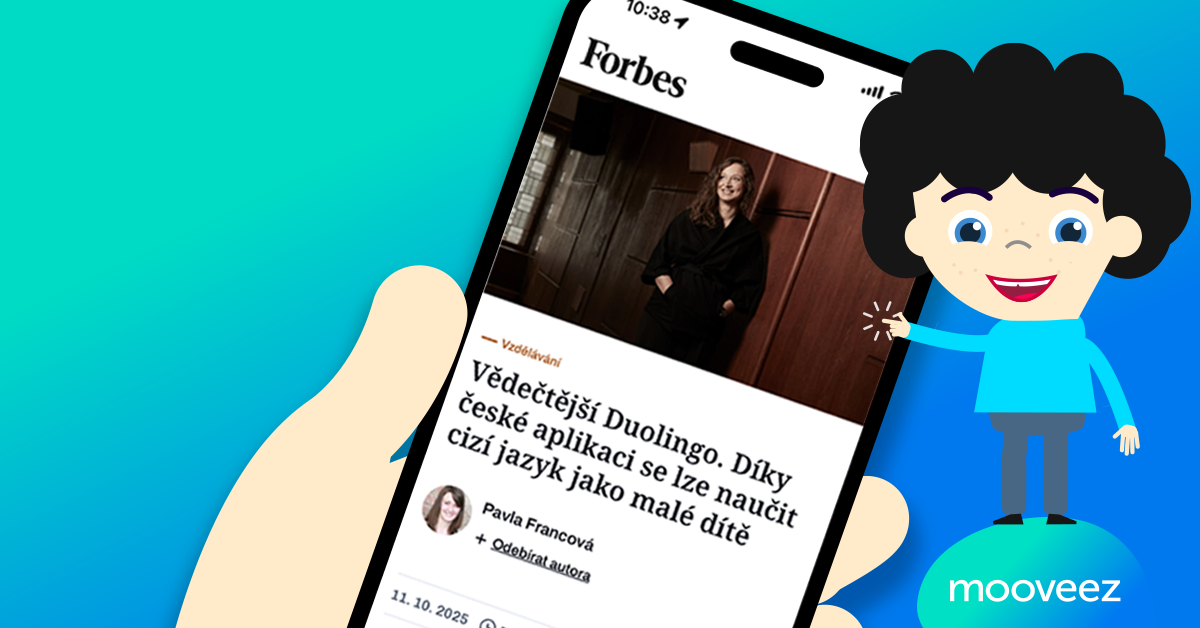
The article, with the telling headline "A More Scientific Duolingo", outlines how we've managed to combine the latest findings in linguistics and neuroscience with real, practical experience from teaching foreign languages.
How it all started
When Kateřina Chládková was named one of Forbes' top women in science, our founder Miroslav Pešta reached out to her. At the time, we had a simple motto: “Learn languages like children do – effortlessly.” This idea happened to fit perfectly with her research on how the brain naturally learns a language, at any age.
And so, our original app, which mainly used movies and TV series to teach languages was gradually transformed into a completely new educational platform based on scientific principles. Two years of development, millions in investment, and dozens of tests have produced something that, according to Forbes, is fundamentally different from anything else that exists on the market.
Master a foreign language effortlessly
How is the Mooveez app different?
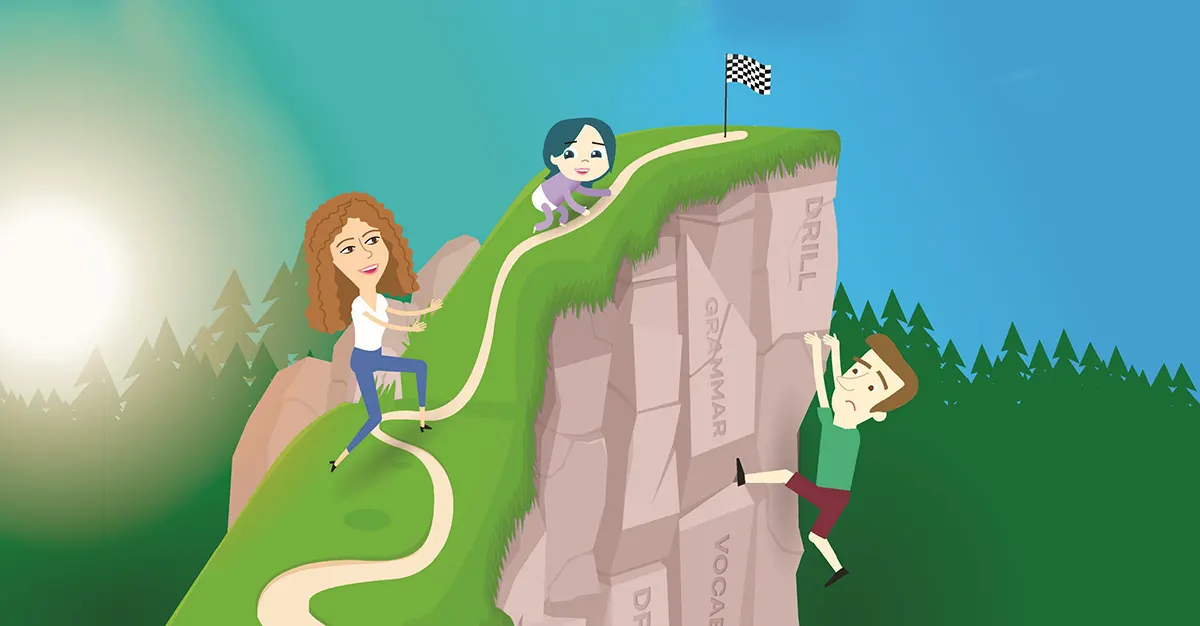
While other apps focus on vocabulary and rote learning, we go back to basics, the natural way of learning languages.
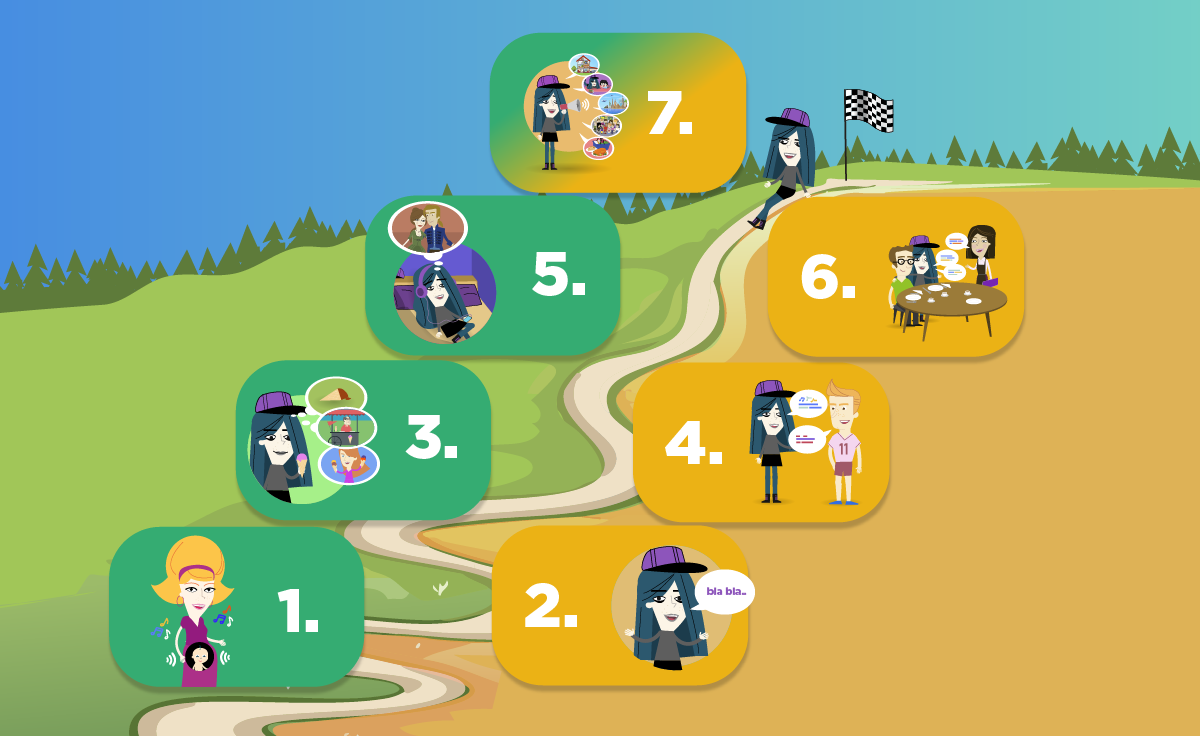
Kateřina Chládková explains that our brain is capable of acquiring a new language using the same mechanisms that a child uses to learn its first language. The key is melody, rhythm, and listening – things that a child perceives even while in the womb.
That's also why the app features prenatal listening, a unique feature that helps the adult brain "tune in" to a new language before it begins to understand individual words. This makes learning a language more natural, stress free and without the need for rote learning.
Science in practice
The Forbes article also outlines specific research results. For example, an experiment in which Czech people listened to Māori for five minutes and were then able to distinguish it from Malay, a similar language. Without learning it, just by listening to it.
This is also how Mooveez works: first you listen, then you begin to recognise the language, and only after that do you actively communicate – just like little children do.
Why do we think it's good to learn a language naturally, the same way we learned our own first language as children? Because unlike with traditional methods, when we go through that same process, we learn the language effectively and without effort. This is because our brain is evolutionarily prepared for it and learns up to a similar level of fluency as was the case with our first language.
What’s next?
The app has been downloaded by over 1.1 million users and, in addition to the Czech Republic and Slovakia, it is also used by students in Poland, France, Germany and Spain among others.
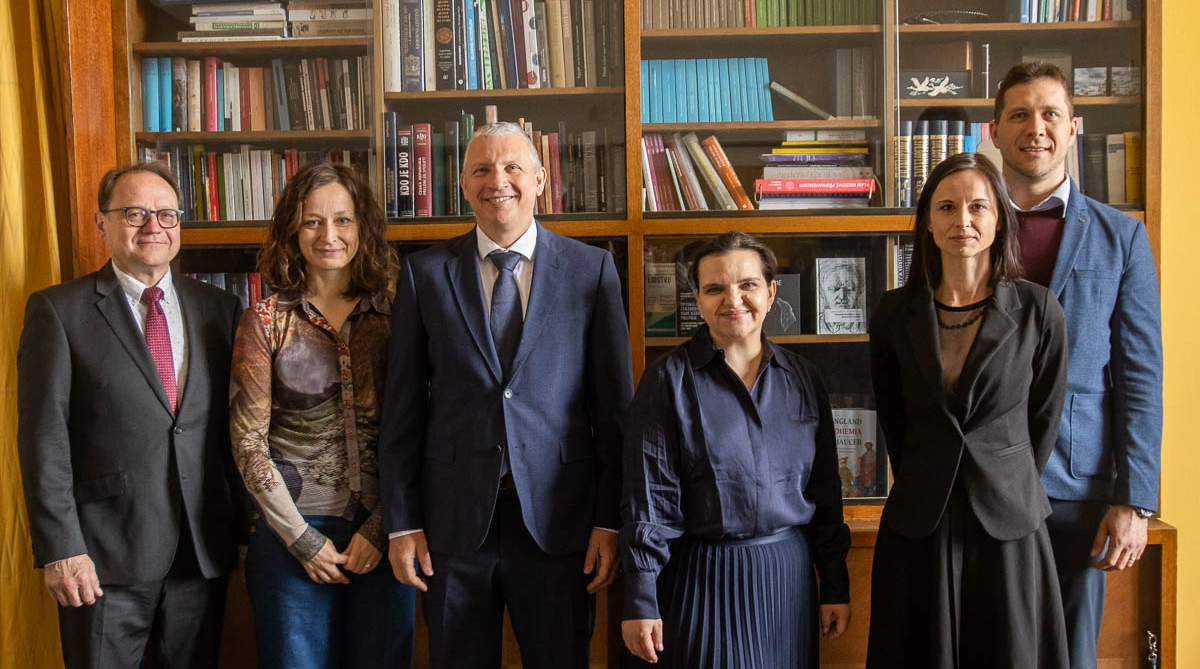
The collaboration between science and business continues – new languages, new features, and further research into how the human brain adapts to a new language are in the pipeline.
"Finally, we have a specific product with which we can demonstrate that linguistics is a very socially relevant field," says Kateřina Chládková from the Faculty of Arts at Charles University in the article.
Read the full article in Forbes magazine and discover how the latest findings in linguistics can help you learn languages as easily as children do.